
The SEO Blog Checklist: What Every Post Needs Before It Goes Live (with PDF download)
Most small business owners don't have a marketing department. They're the owner, the customer service team, the bookkeeper, and somehow also expected to be the SEO strategist. So when they finally carve out an afternoon to write a blog post, they want it to be effective. The problem is that writing the post is only half the job.
The other half happens before and after the writing itself: choosing the right keyword, formatting the page so people (and search engines) can easily understand it, adding metadata, linking it to the rest of your website, optimizing images, and making sure it actually has a chance of being found.
Small business blog posts have trouble ranking because they're missing the technical groundwork that tells Google, and now AI search tools, what the page is about and why it's worth showing to someone.
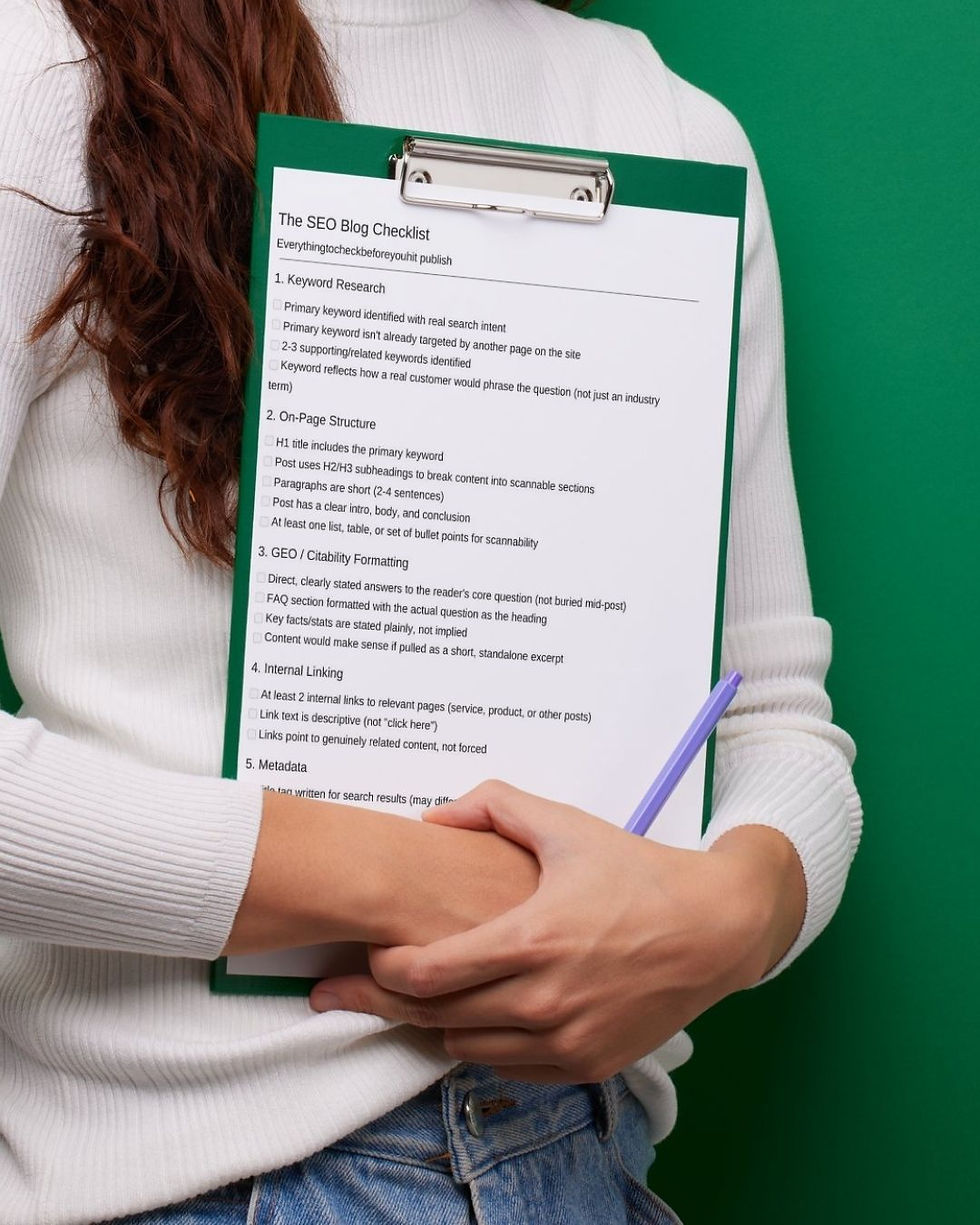
That's why I recommend using an SEO checklist - it helps keep track of all the tedious, technical steps that go into publishing a blog that will actually drive traffic.
Every blog post I write for a client goes through the same review before it's published. It's the same checklist I use on my own website, and it's become even more important as search has expanded beyond Google into AI tools like ChatGPT, Perplexity, and Google AI Overviews.
Below is a preview of what's included. You can download the full checklist for free at the end of this post.
Why Use a Checklist Instead of "Just Write Good Content"?
"Write good content" is one of the most common pieces of SEO advice you'll hear. It's good advice, but it's only part of the picture.
Of course, your content should be helpful, but a helpful blog post that isn't optimized is much harder for people to find in the first place. For example, if the keyword doesn't match what your customers are actually searching for or if the metadata is missing, you've made it harder for both search engines and AI search tools to understand what your post is about.
The writing matters, but everything around the writing matters too. This checklist covers those “everything around the writing” steps.
Here are five of the categories I check before every blog post goes live.
1. Keyword Research Comes Before Writing
If you're a small business owner, it's easy to write about what you think customers care about. Keyword research flips that around and starts with what customers are already searching for.
Every blog post should start with a keyword, not just a topic.
What’s the difference?
"Wedding flowers" is a topic.
"How far in advance should I order flowers for a fall wedding?" is a search query that becomes a keyword.
Before I draft a blog, I make sure there's a primary keyword with real search intent behind it, that it hasn't already been targeted somewhere else on the website, and that there are related keywords that fit naturally throughout the post.
Skipping this step is one of the biggest reasons a well-written blog never gets found.
2. Good Structure Helps Everyone
Most people don't read blog posts from beginning to end. They skim first, looking for an answer.
Search engines act similarly - they're looking for clues that help them understand what the page is about.
That's why things like clear headings, short paragraphs, and a logical flow from one section to the next are important. It makes the post easier to read, but it also makes it easier for Google and AI search tools to understand.
A well-structured blog isn't just easier to read, it’s easier to discover, too.
3. AI Search Needs Clear Answers
One of the biggest changes over the last couple of years is how people search.
Instead of typing a few words into Google, they're asking complete questions in ChatGPT or Google's AI search.
That means your content needs to answer questions clearly and directly. If the answer is buried halfway through the article, it's much harder for an AI tool to pull it into a response. I look for opportunities to answer common questions directly, use descriptive headings, and include FAQ sections when they make sense.
Clear, skimmable writing works well for readers who are skimming your post, and it’s also good formatting for AI search.
4. Every Blog Should Connect to the Rest of Your Website
A blog post shouldn't exist on its own. It should connect to the rest of your website.
Include a paragraph in your blog that connects to one of your product collections or services page as a way to naturally incorporate internal links.
Internal links keep readers on your website as well as help search engines understand how the pages on your website relate to each other.
5. Metadata Is What People See First
When people search with google, the first thing they usually see is the title tag and meta description of a page.
Those few lines are what convince someone to click - it’s both a hook and essential information.
That's why it’s important for every blog post to have an optimized title tag and a custom meta description. There are some behind the scenes meta data at work also, like descriptive image alt text and properly sized images (that also help with site speed).
These are some of the most tedious steps, but they're often the difference between someone clicking on your article or scrolling right past it.
Why All of This Matters
Most small businesses don't have unlimited marketing budgets. Every page on your website has to work a little harder.
That's why blogging is such a valuable long-term strategy. One helpful article can answer a customer's question today, bring in search traffic next month, and still be working a year from now.
The writing is important, but the optimization is what gives that article the best chance of being found.
Learn more about this in Why Your Website Isn't Showing Up in AI Search (And How Blogging Fixes It).
Blogging is a natural way to answer the specific, niche questions your customers are already asking. Every post becomes another opportunity to demonstrate your expertise while creating another page that can appear in search results.
Optimization is what turns your blog post into a long-term marketing asset.
Download the Free SEO Blog Checklist
Want to see everything I check before publishing?
Download the complete SEO Blog Checklist and use it to audit your own website.
[Download the Free SEO Blog Checklist]
You'll get all ten categories, along with every technical detail I review before a post goes live - from keyword research and metadata to image optimization, schema markup, publishing, and post-launch promotion.
If you're a small business owner, I hope this checklist helps you publish stronger blog posts, whether you're writing them yourself or handing them off to someone else.
And if you get halfway through and think, "I'd rather spend my afternoon serving customers than writing metadata," that's exactly why I created my Partnership Plan.
Small business owners shouldn't have to become SEO experts to market their business well.
Comments